
🔥 Best Monthly Dividend ETF Strategy for 2026 Retirement & Passive Income Investors
In 2026, investors are no longer asking, “Which ETF pays more?”
They are asking:
Which ETF builds sustainable monthly passive income without destroying long-term wealth?
If you’re considering KODEX U.S. Dividend ETF versus KODEX U.S. Growth Covered Call ETF, this guide will help you build a high-income, tax-efficient, retirement-ready portfolio.
📌 About KODEX ETFs
Samsung Asset Management operates the KODEX ETF lineup, one of the largest ETF platforms in Korea, offering global exposure with local accessibility.
Two income-focused options stand out in 2026:
- KODEX U.S. Dividend ETF
- KODEX U.S. Growth Covered Call ETF
Let’s break them down from a wealth-building and retirement income perspective.
1️⃣ KODEX U.S. Dividend ETF
📈 Long-Term Wealth Building + Dividend Reinvestment Strategy
This ETF focuses on high-quality U.S. companies with consistent dividend growth. It typically aligns with dividend-focused benchmarks such as:
- S&P 500 Dividend Aristocrats
- Dow Jones U.S. Select Dividend Index
💡 Why It Matters in 2026
- Strong capital appreciation potential
- Dividend reinvestment compounding effect
- Better risk-adjusted return over long periods
- Ideal for retirement portfolio accumulation
🎯 Best For:
✔ Investors in their 30s–50s building retirement assets
✔ Long-term wealth building strategy
✔ Capital preservation with moderate growth
✔ Tax-efficient dividend investing approach
2️⃣ KODEX U.S. Growth Covered Call ETF
💵 High Monthly Cash Flow Strategy
This ETF combines growth stocks with an options-based income strategy. It generates additional income by selling covered calls, similar in concept to strategies linked with:
- Nasdaq-100 Covered Call Index
💡 Why It’s Popular in 2026
- Higher distribution yield
- Attractive for monthly passive income seekers
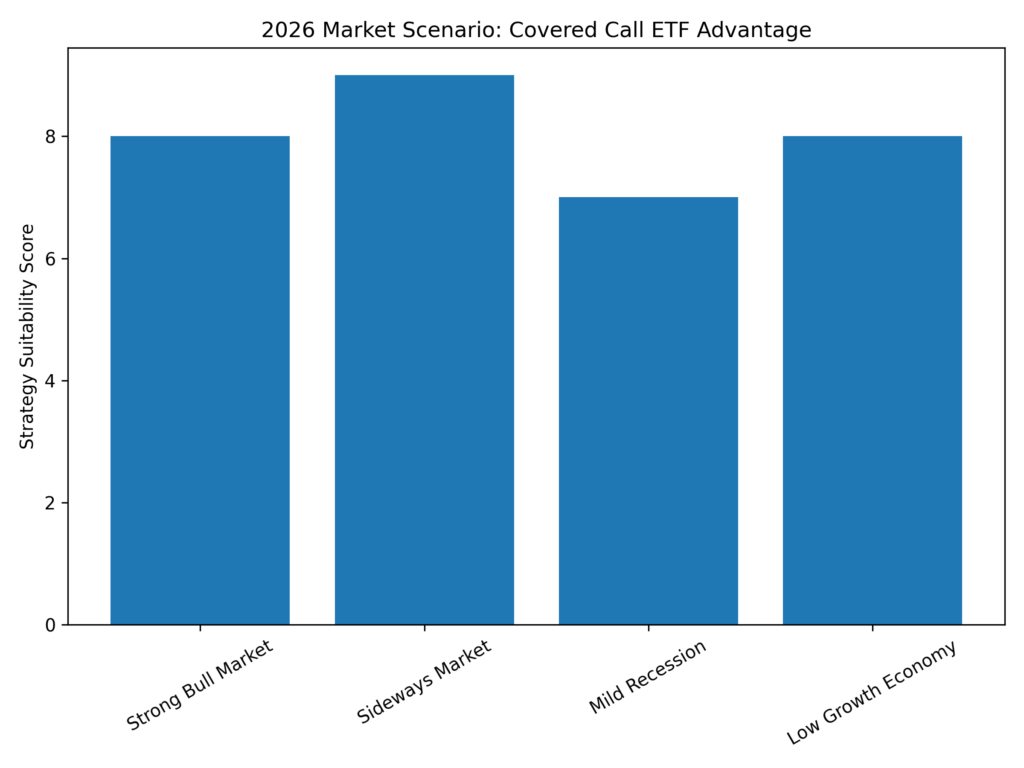
- Performs well in sideways or slow-growth markets
- Strong income-focused portfolio component
⚠ Trade-Off
- Upside potential is capped
- May underperform in strong bull markets
- More suitable for income extraction than aggressive growth
🎯 Best For:
✔ Retirees needing stable monthly income
✔ Investors seeking inflation-adjusted cash flow
✔ Portfolio volatility hedge strategy
📊 Direct Comparison (High-Level Investment View)
| Category | U.S. Dividend ETF | Growth Covered Call ETF |
|---|---|---|
| Yield Potential | Moderate | High |
| Capital Growth | High (Long-Term) | Limited |
| Volatility | Moderate | Lower in flat markets |
| Risk-Adjusted Return | Strong | Stable income focus |
| Retirement Suitability | Accumulation Phase | Distribution Phase |
🔥 2026 Market Outlook: Which Wins?
If 2026 sees:
- 📉 Slower GDP growth
- 📊 Market volatility
- 🏦 Gradual interest rate normalization
Then:
- Sideways market → Covered Call may outperform
- Strong tech rally → Dividend ETF likely wins
- Recession risk → Dividend strategy offers capital preservation
💼 Smart Asset Allocation Strategy
Instead of choosing one, consider a balanced income portfolio model:
- 60% U.S. Dividend ETF
- 40% Growth Covered Call ETF
This approach delivers:
✔ Monthly cash flow
✔ Long-term capital gains potential
✔ Diversified income stream
✔ Retirement-ready passive income system
🏆 Final Verdict: Which ETF Is Better for Passive Income in 2026?
There is no universal winner.
- If you are building long-term wealth → U.S. Dividend ETF
- If you are generating retirement income → Growth Covered Call ETF
- If you want both stability and income → Combine strategically
The real goal is not chasing high yield.
It is building a tax-efficient, risk-managed, income-generating portfolio that survives market cycles.